
By Isaac Ato MENSAH
Accra- 10 September, 2018.
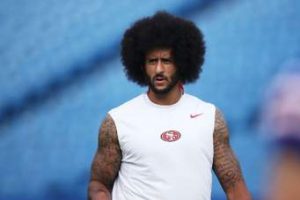
What Nike has done these past few days, as has been its practice on several previous occasions, is to choose principle over public opinion.
Public relations professionals always strive for the maximum attainable positive public image or public opinion.
This is where Nike’s latest promotional material gets our attention.
In the promotional piece released last Monday – that has since gone viral, Nike features a close up shot of Colin Kaepernick, an American football quarterback.
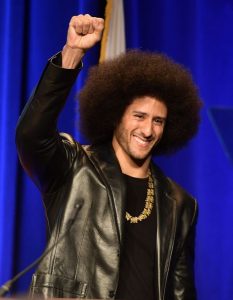
Kaepernick is looking straight into the camera- chin up, with the words, ‘Believe in something. Even if it means sacrificing everything’.
Then at the bottom is the current Nike tagline, ‘Just do it’.
Kaepernick who’s only 30 years old and in the prime of his career opted out of his San Francisco 49ers contract in 2016 and has been without a team since then.
American football players earn an average of US$10 million a year!
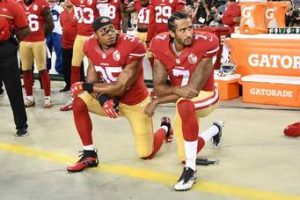
Colin Kaepernick initiated protests within the National Football League (NFL or American Football) by kneeling whenever the US national anthem was played. Others joined in.
‘The NFL has effectively blackballed Colin Kaepernick’, wrote Kevin B. Blackistone on March 23, 2017 in the Washington Post.
Blackistone argues that though Kaepernick’s touchdown percentage was 13th best in the previous season, he ‘did all of that on a team that was abysmal because of disarray in its ownership and front office, as well as its sidelines’.
‘The 32 NFL owners are obviously sending a message that has little to do with using on field merit to make a team’, stated Roger Groves on www.forbes.com on 13 August, 2017.
Haven’t we all condemned police brutality in various jurisdictions?
How about selective stop and search regimes mounted by the police in various US cities for illicit drugs?
Does this sound familiar in Ghana where the police have been selectively switching in flashlights in our faces at night at roadblocks for the past 20 years?
It was the British Philosopher Bertrand Russell who stated, ‘One should respect public opinion insofar as is necessary to avoid starvation and keep out of prison, but anything that goes beyond this is voluntary submission to an unnecessary tyranny’.
There are many who have suffered adverse public opinion and even death, as a result of disregarding Russell.
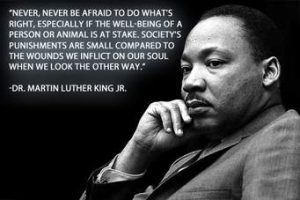
Martin Luther King Jnr is an example.
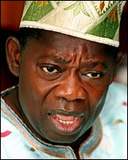
Another is Moshood Abiola of Nigeria who refused to accept the election results as dictated by General Sanni Abacha.
In the case of Abiola, public opinion said even though we all know in our hearts that you have won; just recant your declaration of victory to save yourself from imprisonment.
Abiola refused…..and died in captivity.
How morally sound were the actions of Kaepernick and Abiola?
‘Donald Trump has made the protests a key part of his appeal to his base, arguing that the players are disrespecting the anthem, the US flag and the military’, reported www.theguardian.com on 8 September, 2018.
‘I think it’s a terrible message and a message that shouldn’t be sent’, Trump told the Daily Caller website about the Nike promo. ‘There’s no reason for it.’
Really?
What are the options left for persons and organisations that choose to speak out or act against situations that they find illegal and or morally repugnant?
Numerous individuals throughout history have had to confront this questions: They include – Martin Luther King Jnr, Nelson Mandela, Moshood Abiola and Colin Kaepernick?
One option is to keep quiet and safeguard your privileges within the system.
Another option is to directly confront the situation, relentlessly expose the problem and possibly offer a solution.
Yet another option is to choose to walk away.
Self preservation is a strong basic instinct.
But isn’t acting on knowledge, reason and imagination versus instinct and emotion what distinguishes man from the other creatures?
Abiola chose his option; so did Mandela and so has Colin Kaepernick.
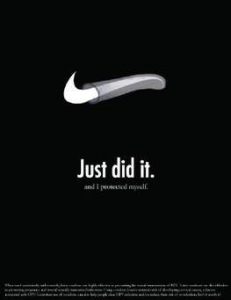
Nike have also chosen theirs.
What option do you favour?
Feedback; [email protected]
Writers and Shakespeares Ghana Limited exists to be a moral and intellectual guide to the best practice of PR and integrated communications around the world, beginning with Ghana.
Comments are closed, but trackbacks and pingbacks are open.