
By Isaac Ato MENSAH
Accra – 24 November, 2018.
Media owners and managers in Ghana are struggling; and they appear to shout with one voice, ‘Are we in business or we are in voluntary service?’.

How can we forget TV Africa?
Today, it only produces a voice over blended with library files popularly referred to as post production.

Another example, is the EIB Media Network of Dr Kwabena Duffuor, former governor of Bank of Ghana and former finance minister.
It should have been easy, for, having established a bank and an insurance company, his media managers could expect a ready-made client base that their marketing teams could readily lobby for business promotion and advertising revenue.
But now that uniBank’s license has been withdrawn, will it be too farfetched to anticipate the financial and human resource challenges that EIB Media Network is going through?
What about Viasat 1? Their glory days could at best be likened to a cameo.

In short, generating good quality locally produced news, entertainment and documentary programs is not our forte.
Allowing every exuberant “presenter” or “producer” on air so long as they have a sponsor is certainly not a sustainable way to run a media house! Too bad!
An important starting place to assist our media managers to reboot is Herman and Chomsky’s thoughts on what the media bring to us.
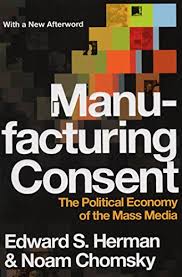
In “Manufacturing Consent; The Political Economy of the Mass Media,” Edward S. Herman and Noam Chomsky gave five filters which media managers use to determine what they should produce for consumers.
Advertising, sourcing, flak, ownership and ideology of anticommunism (aka who is the common enemy) were determined by the authors as the constant parameters or guideposts which inform decision making in media houses.
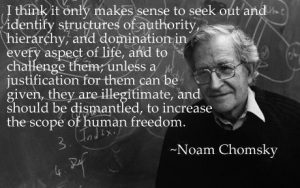
In subsequent publications and interviews, Noam Chomsky has been very firm and resolute in his condemnation of the manufacturing of consent by a few men and women sitting in boardrooms and deciding what media content should be presented to humanity.
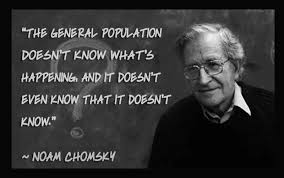
The big question is not whether you agree with Chomsky or not.
However, it will be helpful if each media manager engaged and assessed how these filters impact on his current practice within Ghana.
Is sport and entertainment broadcast a safe bet then? Not necessarily.
Can you deliver world-class nonpolitical news in Ghana?
Yes, if you have a clearly defined editorial policy – written and displayed to staff and the public, and rigorously implemented.
How about non-religious news and nonreligious broadcasts? Ditto.
Can a media house criticise big business and yet go to them for business promotion and advertising revenue?
Why not?
And If they are going to be emotional about your having criticized them on your airwaves, tell them to simply do the right thing.
Tell them their PR team can always prepare an adequate response.
Journalism is a social good; it affords all persons the world over an opportunity to enjoy the inalienable rights of freedom of thought and conscience.
When practised at the highest standards journalism has the capacity to enlighten both the hearts and minds of its individual consumers.
Having identified and established the parameters within which media can work effectively, what management model is therefore appropriate?
Whichever management model is adopted, it is important to remember that it must be based on sound practical knowledge grounded in a first class apprenticeship at a media house steeped in international best practice.
Anything else including an alphabet soup of academic credentials will simply not fly.
Feedback; [email protected].
Writers and Shakespeares Ghana Limited exists to be a moral and intellectual guide to the best practice of PR and integrated communications around the world, beginning with Ghana.