
By Isaac Ato MENSAH
Accra- 5 November, 2018.

Last Thursday, Pre-Vas Royal Kids School in Teshie organised an emergency teacher counselling session.
The theme was caning and corporal punishment.
The previous day, some parents had caused the proprietors and the headmaster a sleepless night on account of some other parents’ children having been caned.
‘I haven’t slept at all,’ groaned Webster Afotey Marshall, the headmaster, as he announced the emergency counselling session.
“Masha Marshall”, as the students prefer to call him, had previously warned against the practice.
The concerned parents had informed the proprietors and headmaster that where the cane could not be used, some teachers resorted to very severe verbal abuse.
This is where Charity Armaah, Municipal Guidance and Counselling Coordinator (MGCC) for Ledzokuku-Krowor Municipal (LEKMA) Education Directorate of Ghana Education Service (GES), comes in.
‘I used to cane my first two daughters,’ she confesses in a very open and frank discussion. ‘But after I went through the guidance and counselling course and learnt of the traumatic effect on the child and the kidneys seen at autopsy, I stopped.’

After the MGCC made participants identify problems with their respective classes, the white board was filled with a litany of students/pupils problems.
‘Which of these was your offence in school when you were at their age?’ she turned us inside out.
Mine coincided with hers; ‘ABSENCE FROM SCHOOL’.
The MGCC uses The Headteacher’s Handbook published by the GES in 2010 as her main reference material.
Therein it states that there is the need to ‘find out the root cause of deviant behaviour’.
The supporting reference material is Tools for Discipline in Basic Schools which is a recommended material for schools that do not use corporal punishment.
The former prescribes punishment without ‘malice’, with upright intentions to ‘correct’ pupils and for teachers to take ‘responsibility’ for the punishment.
Make no mistake; the MGCC is a firm and stern disciplinarian.

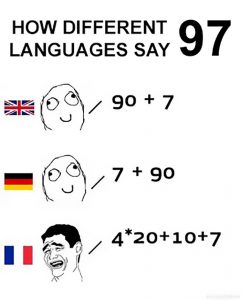
But she states emphatically that she has observed that Ga and French teachers are too quick to resort to the cane.
A school once called her to witness a live weeping and wailing session of class two pupils (seven year olds) who had been caned mercilessly by a French teacher.
‘When I asked what the lowest score was, the children said 87 percent,’ she narrated with shock. In words…. Eighty-Seven percent!!!

She, just like the management of Pre-Vas School, is clearly faced with a huge problem of filling the knowledge gaps of the teaching staff of both public and private schools.
And both protagonists have chosen counselling instead of suspensions and dismissals as their solution.
If you think their approach is weak, just hold on.
In Teshie-Nungua Estates, with mainly middle class families, the majority of the parents at a meeting on the matter voted for caning.
Sensing a near defeat, she and a colleague at the high table raised their hands to overturn the vote, even though as guests they were not qualified to vote!
At the Pre-Vas School meeting, the counsellor admitted to statements from participants that sometimes the parents themselves telephone the teachers and urge them to cane their children.
Hence the GES guidance and counselling coordinator passes no judgement on any teacher except the Ga and French teachers.

The MGCC has several anecdotes about the severe consequences of caning.
They include fatalities in children, injuries, and occasionally fights between teachers and parents….and even between teachers and pupils.
Hence she explains that she is ‘more particular about all teachers avoiding corporal punishment, not only French teachers’.
The reference materials prescribe various disciplinary options that do not involve physicality.
The MGCC patiently and comprehensively explained each technique, their indications and advantages.

She advises: ‘Look at their temperament and decide which punishment is appropriate’.
The handbook prescribes that there should be no punishment for poor academic performance.
Counsellor Armaah’s refrain is: ‘Find out and think about the root cause of the offence’.
We salute the headmaster and proprietors of Pre-Vas School, and Charity Armaah, the MGCC for their decision to introduce and explain these new ideas and techniques to their teachers and parents.
The LEKMA Municipal Guidance and Counselling Coordinator is happy to announce that after the session, the management of Pre-Vas School decided that the Guidance and Counselling Unit of GES should add its name to the list of schools that do not use corporal punishment.
Now how is that for progress?
Feedback; [email protected].
Writers and Shakespeares Ghana Limited exists to be a moral and intellectual guide to the best practice of PR and integrated communications around the world, beginning with Ghana.