
By Isaac Ato MENSAH
Accra- 26 October, 2018.

The closure of KNUST is a management disaster; a public relations crisis.
This week in my Management class, we discussed Bureaucracy in organisations.
My students asked my views on the crisis at Kwame Nkrumah University of Science and Technology (KNUST).
I told them I didn’t know the details but I was sure it was a leadership crisis purely from the perspectives of organisational bureaucracy and public relations.
The management structure of the KNUST at its apex is modelled on a tripartite system following international best practice; the chancellor, the vice chancellor and the university council.
At KNUST, the university council has reps from graduate students, undergrad students, the professorial ranks, the non-professorial teaching ranks and non-faculty university workers among others.
These reps sit together with notably the vice chancellor (VC), pro VC, registrar and dean of students as university council and help them to manage the university.
In between university council meetings, the appointed officers are expected to act as per their appointment letters.
Meanwhile, the chancellor (or president in case of private universities) also has an independent mandate to run the university according to the policy direction of the owner(s) or founders.
In other words, the tripartite offices of the chancellor, the VC together with his registrar and other officers; and the university council act as a system of checks and balances on each other.

The university system itself thrives on the rigorous pursuit of truth through dialectics, didactic learning and questioning of sources and authority.
Authority here refers to both authorship of published documents as well as unwritten sources of authority (knowledge).
But such sources must be subjected to a rigorous test of validity and reliability before they can be accepted by the scientific community.
Lecturers and students do this all the time.
Unfortunately, here in Ghana, when someone says, “you don’t respect authority”, then it is a really personal “ghana” matter.
Often it is shortened ominously to, “You don’t respect!”
They mean to say, because they have been around longer than you, on no account should you question and punch holes into their argument.
Again, often persons who occupy “Authority” positions will instruct their subordinates by oral orders to act.
But when asked to put their orders in black and white, it turns out to be a long drawn out battle.

The “Authority” will not want to commit himself in writing because they do not want their statements to be used against them in future.
In academic settings, faculty have to consider how students use facts, evidence and logical reasoning to support or disprove any assertion.
There may be divergent views, but all will be assessed fairly.
For example, if I write or say that the French have absorbed didactic learning into their culture way back from the Enlightenment era and that it is the modus vivendi for training children at home, it is best practice to provide a source of my assertion.
If I do not provide an academic reference, a source of authority or authorship, but the person reading this article or marking my script finds my assertion empirical or a directly observable fact, then (s)he ought to accept it and give me a fair score.
He should not say “When were you born?” or “Have you been to France before?”
With these parameters, let us look at the closure of KNUST and ask some serious questions.
First, what if one of the tripartite offices namely, chancellor, VC and University Council is occupied by a figure who is beyond reproach for political, cultural or religious reasons?

Clearly this will affect academic independence and training since students and faculty cannot subject her(his) public actions to academic scrutiny and rigorous intellectual analysis.
Second, what overt, covert or assumed baggage does such an office holder place on the VC and chairman of the University Council?
And on the faculty, student body and public at large?
This could lead the other officers to bend over backwards to accommodate her(him) even when it is not necessary or expected.
Obviously, not everyone owes or acknowledges the type of allegiance that is expected or sometimes demanded.
‘Administrative questions are not political questions’, says Woodrow Wilson, former lecturer and US president. ‘Although politics sets the task for administration, it should not be suffered to manipulate its offices.’
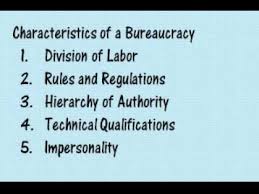
The effective functioning of a bureaucratic office such as the KNUST management depends on certain well documented and accepted ideals and practices.
Notable among them are: a hierarchical organisation; rules and regulations; rules administered by non-elected experts; rigid adherence to and performance of assigned tasks; division of labour; regular and continuous performance of the same activity; all decisions and powers are specified and restricted by regulations; and formal lines of authority.
Now to the big question; what happens to the vice chancellor, whose chairmanship of the university council has been revoked?
Some students are asking that the vice chancellor should be removed.
The interim governing council has been asked to make that decision, according to a press release from the ministry of education dated 25 October 2018!
Our society is not and has not been managed properly; it is pregnant with change.
The brooding midwife fills us all with angst as she has already caused wanton carnage in our sub-region.
KNUST is a meme of that situation.
The news website myjoyonline.com reported Thursday that ‘the students felt oppressed by some policies of the university authorities and that they lived in fear….they did not have enough opportunities for conflict resolution and dialogue with the authorities, resulting in a breakdown of trust between students and the authorities’.
One commentator on social media observed that recent happenings within his voluntary society were worse than the KNUST crisis.
He and many officers were mere puppets holding de jure positions; they could not read the rules and act as some godfathers wielded the de facto powers, issued diktats and performed tasks not assigned to them.

He observed that the young members were choosing to walk away from that society – a far better option than violence.
If we do not effect the urgently needed reforms in our national institutions then ‘we shall soon reap the whirlwind’, my mentor will add.
This week’s terrible violence at KNUST – that we all condemn, is a wakeup call.
Feedback; [email protected]
Writers and Shakespeares Ghana Limited exists to be a moral and intellectual guide to the best practice of PR and integrated communications around the world, beginning with Ghana.