
HALAL! Where do you get your meat from?
By Isaac Ato MENSAH
Accra- 12 August, 2018.
The question itself is halal!
I’d been thinking of this for a long time.
But hey, here in Ghana, a lot of people act big and you may be deceived into thinking they know what they’re doing.
But I’m beginning to discover the Ghanaian.
So on Saturday evening, I hit the streets in my hood with this gusto question- ‘Where do you get your meat from?
One of my grandmothers, Auntie Sophia, whose son- my uncle- who works with the vet office, had told her never to eat any meat that does not have a vet stamp on it.
Auntie Sophia told me this about eight years ago.
‘But how does he expect you to see a vet stamp on the meat?’ I had understood the import of her advice but my dull mind felt like probing further.
‘Okyere dee m’endzi,’ she replied in her rich Fante dialect. To wit, ‘It means don’t eat it.’
I may or may not get an answer, I didn’t care.
My real aim for asking was the follow up question, ‘Do buyers ask you this question?’
My first stop was a khebab joint opposite Suncity Hotel, in South La, Accra.
‘You’re the first person to ask this question,’ Peter Nsoh told me.
He had been selling khebab at this joint for at least seven years, together with his brother.
They buy their meat from London Market in James Town, Accra.
I know the place. When I went there about five years ago, there was a pool of water in a tap area made of concrete.
The dirty black water had been blocked to enable washing of the goat that had been slaughtered and burnt with old lorry tires.
That is the usual way goats, sheep and cow are prepared- burning with lorry tires.
This is the testimony of someone who has witnessed it- no one should come and beat me up for speaking the truth. LOL.
Nsoh told me his khebab which sells for Two Cedis (40 US Cents) for a piece and sausage which sells for Three Cedis (60 US Cents), both on a 30-centimeter stick is patronised by both Whites and Blacks.
He cannot tell the nationality of all Black persons who sit to eat but he can obviously identify White folks.
None has asked this question before. Nsoh was happy to talk to me and is looking forward to reading this story.
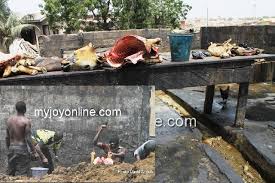
No comment!
Then I moved to a popular pork seller about 100 meters away from La General Hospital. Her assistant did not know the source of the pork but introduced me to her ‘Madam’.
‘Someone brings it from Mankessim.
I have my receipts and vet certificates at home,’ she said preferring that her name is not published.
She informed me that there are police officers on the route from Mankessim to Accra who stop the meat trucks and inspect the vet certificate.
She also told me that no one has asked that question before and we had a few terse moments about my mission.
Later we were joined by a customer-relation of hers who insisted that she should give her name to me because it will be good publicity for her, but she declined.
The initial halal was turned friendly by this customer-relation of hers.
My interviewee told me she eats some of this pork so she makes sure she doesn’t buy from along the coast of Ghana where the free range pigs are seen openly eating faeces.
She however admitted that she doesn’t know the farm in Mankessim where the pork comes from.
I had noticed for some time that her pork does not have the usual red colouring meant to make it attractive.
‘That is your unique selling proposition, your brand identity- no colour roasted pork,’ I commended her for that uniqueness.
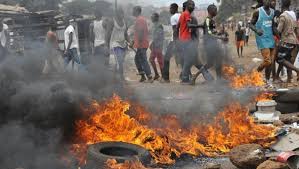
Hey, what’s going on here? Source; hrw.org
Marwako was the big one.
The chef, who was busy cutting his shawarma (roasted shredded chicken), was cool and smiling but when I told him I was a journalist he became quite apprehensive.
He didn’t know the answer and people don’t ask that question but he was quick to bring in the general manager Richmond Kponor.
Kponor has been well prepared for these kinds of situations.
He sat opposite me and gestured with his car key as the chef monitored our conversation closely.
‘Customers don’t ask,’ said Kponor. ‘It’s only Muslims that when they’re given meat they want to know whether it’s pork or not.’
The general manager explained that when Muslim customers are told the owner is a Muslim then they relax but no one asks the source of the meat.
He informed me that the vet office, castle people [government] and other public officials visit regularly to inspect [their supplies] but no customers ever ask.
To buttress his answer he explained that in fact, ‘Given their [staff] level of training, if anybody wanted an answer to such a question, a supervisor would be called’.
Kpornor said Marwako imports its meat from Sadia in Brazil, but when it has a shortage, it buys from Poultrade, a local supplier.
Marwako serves about 200 customers a day.
This, he assured me, is the confirmation that despite their recent worker abuse scandal involving a Lebanese supervisor, they have a strong brand.
We both agreed that Ghanaian journalists have created fear in people so anytime you introduced yourself as a journalist, you’re likely to meet a hostile response.
In fact as we continued to chat, I reserved my right eye for the chef’s knife, just in case.
When Kponor mentioned the word halal as the Islamic thing that attracts customers to them, I told him that could be Marwako’s unique selling proposition and that would be the title of my story. Thank you, Richmond.
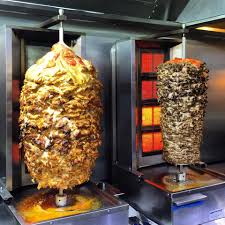
Shawarma. Source; facebook.com
Joker’s was the real halal.
The security men and waiters had engaged me nicely until one of their foreign managers was brought into the conversation, a man most probably of Lebanese descent.
‘We buy it from some Lebanese guys in Accra. I don’t have to tell you. Go and ask Marwako,’ he grew impatient.
‘I’d been to Marwako,’ I desperately replied, hoping to convince him.
But, I quickly realized what was going on.
One of the security men, being so friendly, was trying very hard to convince his boss to do good PR.
‘It’s his right not to answer,’ I intervened. ‘Don’t put pressure him.’
There’s something about Ghanaian-Lebanese oral communication that has been problematic on crucial occasions and it needs to be improved.
My last stop for the night was Suncity Hotel Apartment.
Nice smiling Patience Nabil was the waiter at Wine and Dine restaurant.
‘I don’t know if anyone has ever asked my colleagues but no one has ever asked me,’ came her composed response.
I could tell she comes from Upper East Region because of her answer so I enquired of her village and got to know she comes from Tongo.
When people from Upper East Region are speaking English, it’s different.
Their answers are usually more learned, from my experience of Ghanaians.
From that one sentence from Nabil who had worked at Suncity for just one year, I ended my evening.
No further questions.
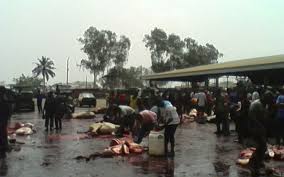
‘Look haaarrrd,’ Rakifi told Simba, pointing to the river. Source; ghanaweb.com
If you want to brand your meat or break the ice to any conversation you may adopt this free branding Q&A;
‘Halal?’
‘Ce n’est pas halal!’
Elsewhere around the earth, citizens are worried about two percent horse DNA in canned beef.
How do we get to asking searching questions of ourselves?
Create a hashtag now; #Wheredoyougetyourmeatfrom?
Hopefully, when it gains currency, it will no longer be a hostile question.
The writer, Isaac Ato MENSAH, is the managing consultant of Writers and Shakespeares Ghana Limited, a PR and integrated communications firm, based in Accra. This article is our company’s contribution to health communication and behaviour change communication. You may send feedback through [email protected]. Please do visit our website www.writersghana.com for more.
Comments are closed, but trackbacks and pingbacks are open.