By Isaac Ato MENSAH
Accra- 24 September, 2018.
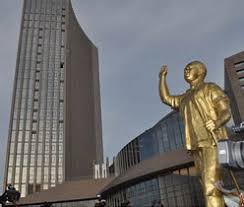
September 21 is now celebrated in Ghana and throughout Africa as Africa Day of Peace in honour of Kwame Nkrumah, Ghana’s first president.
And yes, Nkrumah was an active practising journalist!
Critics of Kwame Nkrumah have perhaps not realized that Prof Ali Mazrui has settled the debate about Nkrumah to their consolation.
Speaking in Accra in 2002 on the topic Nkrumah’s Legacy And Africa’s Triple Heritage Between Globalization And Counter Terrorism, the respected African Scholar said, ‘Nkrumah was a great African but a small Ghanaian’.
Mazrui was fully aware of the Preventive Detention Act (PDA) and the declaration of Ghana as a one party state and the referendum that made for a de facto legal dictatorship in Ghana.
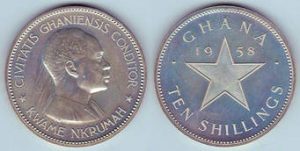
‘No single measure did more to bring down Nkrumah’s reputation than his adoption of internment without trial for the preservation of security’, David Birmingham stated about the PDA in Nkrumah’s biography.
In 1957, Nkrumah passed the Avoidance of Discrimination Act in response to bus strikes led by the Ga people of Accra arising out of discrimination in appointments to government offices…..Déjà vu?
What would Nkrumah have done for the Ga people of the nation’s capital and all of us who have silently and loudly whispered or complained or written or condemned the abusive and deliberate promotion of the Twi language to dominate other ethnic groups’ languages on our airwaves?
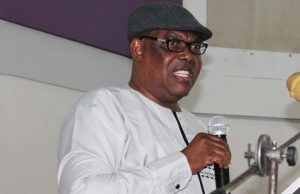
Photo…Kwesi Gyan-Apenteng. A statement signed by George Sarpong, Executive Secretary for National Media Commission said Kwasi Gyan-Apenteng is a Consultant in Communication, Media and Culture… Founder and editor African Topics magazine, the only Pan-African publication dedicated to governance and human rights… Gyan-Apenteng worked with Third World Network, Cultural Initiatives Support Programme, European Union Culture Fund for Ghana…..which means???
What would Nkrumah have said to the National Communications Authority and the National Media Commission whose heads and board of directors he had a greater say in appointing?
Would Nkrumah have made a statement on the occasion of the UN declaration of 2019 as a year of Indigenous Languages?
O yes we can bet on that since he actively promoted the Bureau of Ghana Languages and the National Commission on Culture.
The whole world knew where Nkrumah stood on issues, even if he got it wrong; he did not obfuscate. And he did get some things wrong; he was not perfect.
He also actively promoted the media by establishing the Ghana News Agency (GNA) in 1957.
At its best, the GNA had offices in Lagos, Nairobi, London and New York. Imagine the GNA, as the Reuters equivalent of today!
At its best, the Ghana Broadcasting Corporation operated Radio One (GBC1) which could be heard in Lagos, Nigeria!
It’s all gone! Meeehn!
“It is part of our revolutionary credo that within the competitive system of capitalism, the press cannot function in accordance with a strict regard for the sacredness of facts, and that the press, therefore, should not remain in private hands,” declared Nkrumah.
To this end he implemented pre-publication censorship of all news from 1960.
That was bad, wasn’t it?
He purchased the Daily Graphic from its owners, The Mirror Group of the UK, thus making it completely state owned.
In 1963, as a response to ‘insolence and laziness of boys and girls’,Nkrumah announced on TV among other things ‘the introduction of the National Pledge and the beginning of a National Flag salute in schools and the spirit of service among Ghanaian youth’.
Today, someone will definitely go to court to say they have the right not to salute the national flag….perhaps from a religious group.
The constitutional right of freedom of expression includes the right not to express yourself the way the majority want it.
‘Ghana’s television will not cater for cheap entertainment or commercialism; its paramount objective will be education in its broadest and purest sense’, said president Nkrumah to parliament on 15 October 1963.
Excellent. Bring back Nkrumah now now now! Action- one time!
‘To the true African journalist, his newspaper is a collective organiser, a collective instrument of mobilisation and a collective educator- a weapon, first and foremost, to overthrow colonisation and imperialism and to assist total African independence and unity’, said president Nkrumah to the Second Conference of African Journalists in Accra on 11 November, 1963.
True that!
Nkrumah established the Accra Evening News, together with others, as his private media.
In fact the distance from the Flagstaff House to the Ghana Film Corporation (now TV3) and Ghana Broadcasting Corporation (established 1953) is just about 100 meters and he had a propaganda secretary – Hannah Cudjoe, at one time.
He was in absolute charge of the media.
It was interesting that he admitted to not knowing his birthday.
Perhaps he chose 21st September as a message to the world.
That date is the equinox; a day to reflect on our 12 hours of day light and 12 hours of darkness. It affords us an opportunity to reflect on our common humanity and dignity irrespective of our race, colour or creed.
He had been born Francis Nwia Kofi Ngoloma, he changed his name to Kwame Nkrumah.
He was encouraged by the Catholic priest George Fischer in Axim to start his formal education.
Young Nkrumah caught the attention of Alec Gordon Fraser, then principal of Government Training College (later Achimota School) who brought him to Accra for teacher training.
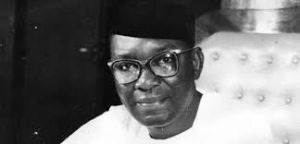
There he heard Nnamdi Azikiwe, a journalist (later to become Nigerian president) speak and that greatly influenced him.
At Achimota, Nkrumah was influenced by Dr Kwegyir Aggrey, brilliant scholar and teacher who exposed him to the ideas of Marcus Garvey.
Thus from Achimota, Nkrumah gained interest in teaching and rhetoric.
He taught in primary schools in Elmina and Axim and the Catholic junior seminary secondary school in Emissano. Here, perhaps his interest in theology was born.
He considered becoming a Jesuit priest when teaching at St Teresa’s Catholic Seminary in Emissano back in Ghana.
Years later, when he had completed his Bachelor’s degree in Theology in Pennsylvania, he was often invited to preach at Presbyterian churches in Philadelphia and New York.
Having obtained a Master of Arts in Philosophy and a Master of Science in Education in Pennsylvania and having debated street orators in Harlem, New York, Nkrumah with his Gold Coast training and the Presbyterian preaching engagements, was now well versed in logic, rhetoric, theology, education and journalism.
He was prepared to take on the world.
‘I liked him and enjoyed talking to him, but he did not seem to me to have an analytical mind. He wanted answers too quickly. I think part of the trouble may have been that he wasn’t concentrating very hard on his thesis. It was a way of marking time until the opportunity came for him to return to Ghana’, said A.J Ayer, his supervisor at University College, London, where he went for further studies.
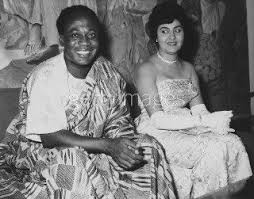
“Fathia fata Nkrumah”….transliterated from Akan means Fathia, the Egyptian wife, suits Nkrumah.
What was Nkrumah’s response to Ayer, his critics and all of us?
‘Just as in the days of the Egyptians, so today God has ordained that certain among the African race should journey westwards to equip themselves with knowledge and experience for the day when they would be called upon to return to their motherland and to use the learning they acquired to help improve the lot of their brethren….I had not realised at the time that I would contribute so much towards fulfillment of this prophecy’ – Kwame Nkrumah, 1957 (The Autobiography of Kwame Nkrumah).
Feedback; [email protected]
Writers and Shakespeares Ghana Limited exists to be an intellectual and moral guide to the best practice of PR and integrated communications around the world, beginning with Ghana.
Comments are closed, but trackbacks and pingbacks are open.